Olympus JournalArchitecture & visual cultureExplore the Journal

Classical forms, materials and imagination

Discover the Details Behind Classical Design

Explore architectural forms, decorative surfaces and the ways contemporary artists reinterpret the classical world.

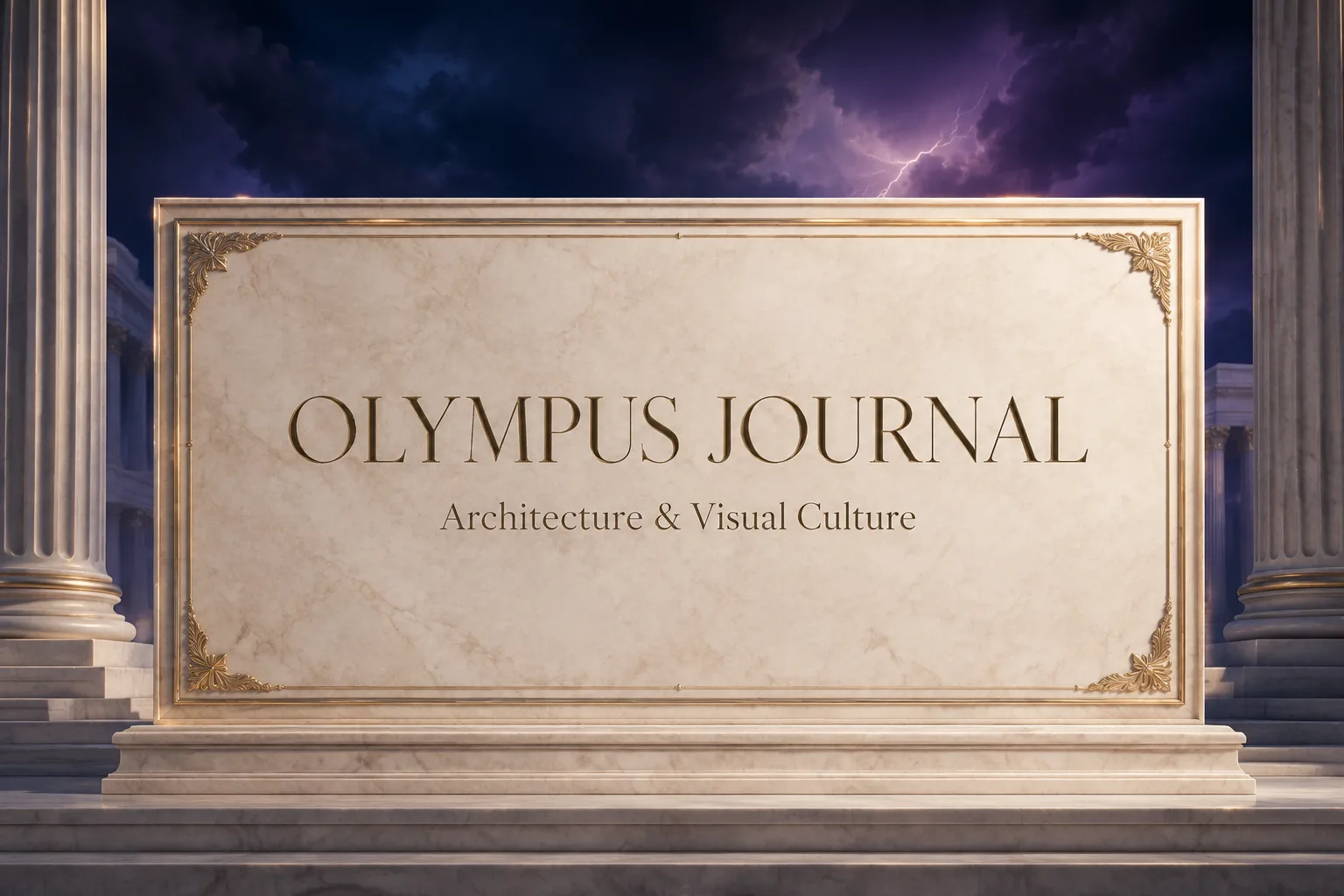
Contemporary concept illustration of an Olympus Journal marble cover panel framed by columns beneath a violet sky
Contemporary concept illustration inspired by classical design.
01Architecture

Architecture & Form

Columns, façades, proportions and the organisation of classical architectural compositions.

02Materials

Materials & Ornament

Stone, decorative surfaces, borders and geometric details read through evidence and visual analysis.

03Art

Art & Interpretation

Classical motifs in illustration, graphic design and contemporary digital art.

Featured stories

Six ways to read
form and surface.

Begin with a column, a vein, a border or a digital light source. Every story distinguishes documented physical evidence from interpretation.

Anatomy of a decorative panel

Field, border
and visual hierarchy.

The cover panel is a contemporary digital composition. These notes explain how proportion, frame, texture, typography and light work together without assigning invented ornament a historical origin.

01

Overall structure

Proportions

A wide horizontal field reads like an editorial masthead; the ratio controls how much room remains around the title.

02

Primary surface

Central field

A quiet area of pale stone keeps the title readable while preserving enough texture to signal material.

03

Edge and transition

Border

A restrained double line separates the title field from the surrounding architecture without becoming the subject.

04

Fictional detail

Corner ornament

Small leaf-like devices articulate the turns. They are invented and are not assigned a cultural origin.

05

Digital material

Stone texture

Subtle veining adds direction and variation, but it does not identify a quarry, cost or fabrication method.

06

Editorial identity

Lettering

High-contrast serif forms occupy the visual centre. They are modern typography, not an ancient inscription.

07

Contemporary treatment

Lighting

A bright panel against violet storm light creates hierarchy and atmosphere rather than historical evidence.

Contemporary Olympus Journal cover panel with marble texture, gold-toned border, corner ornament and violet atmospheric light
Original contemporary concept illustration. Lettering and surface are digitally authored; the panel is not a museum object.

Physical material and digital interpretation

Four elements,
two kinds of evidence.

Open the source register
Comparison of documented physical materials and their digital interpretations.
ElementDocumented Physical ExampleDigital InterpretationSource or Image Credit
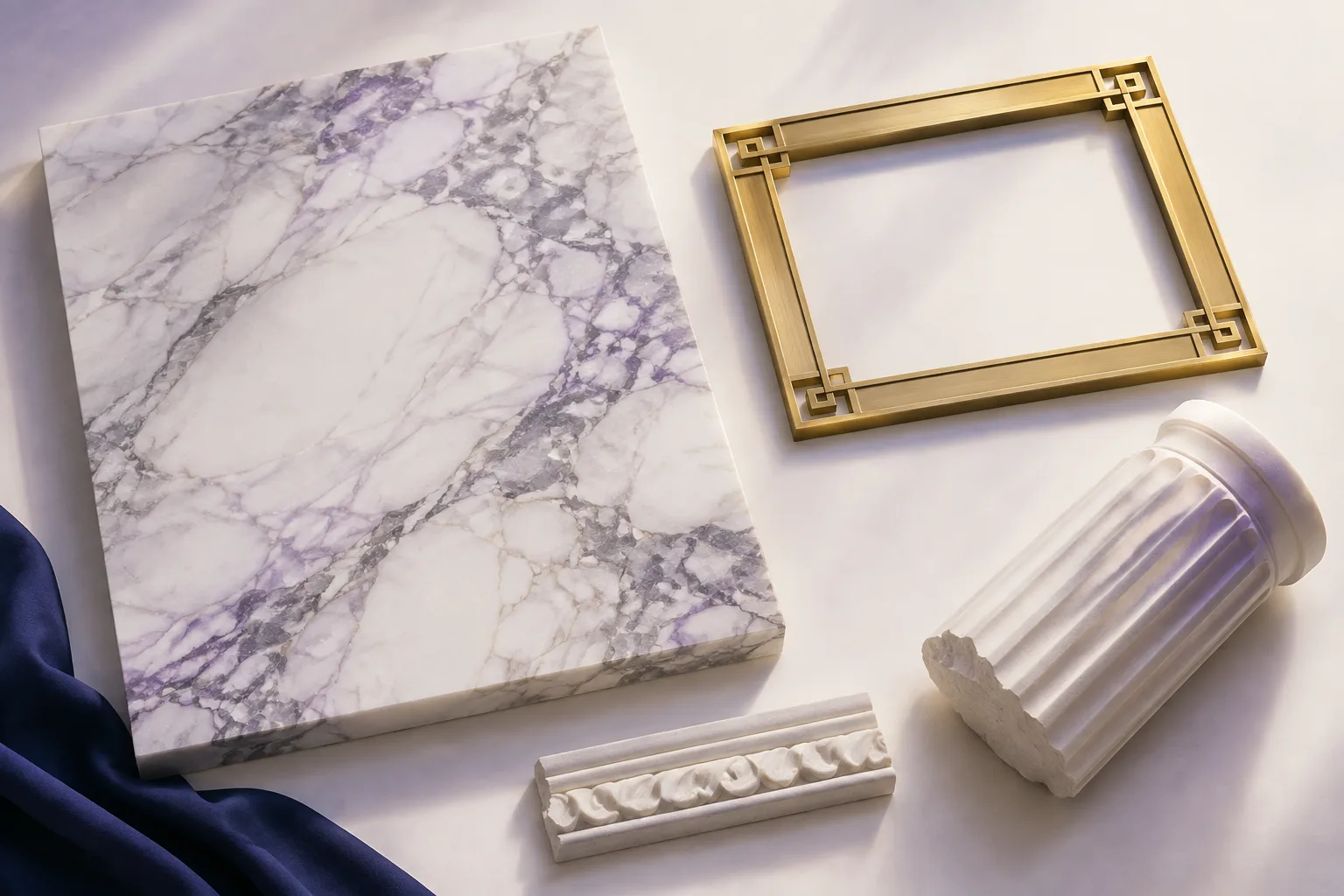
Stone SurfaceCipollino marble pillars with documented wavy banding in the Met Journal.Procedural or painted veining can change scale, contrast and direction without representing a quarried stone.The Metropolitan Museum of Art Image credit register
Decorative BorderItalian Renaissance frames documented by the Met use architectural mouldings and repeated ornament to surround a central field.An invented border can establish hierarchy, but its motifs should not receive a historical attribution from appearance.The Metropolitan Museum of Art Image credit register
Architectural ColumnGreek orders coordinate base, shaft, capital and entablature; the Met and Smarthistory document recognizable systems.A concept image may mix a Corinthian-like capital, exaggerated scale and an unrelated arch for atmosphere.Smarthistory Image credit register
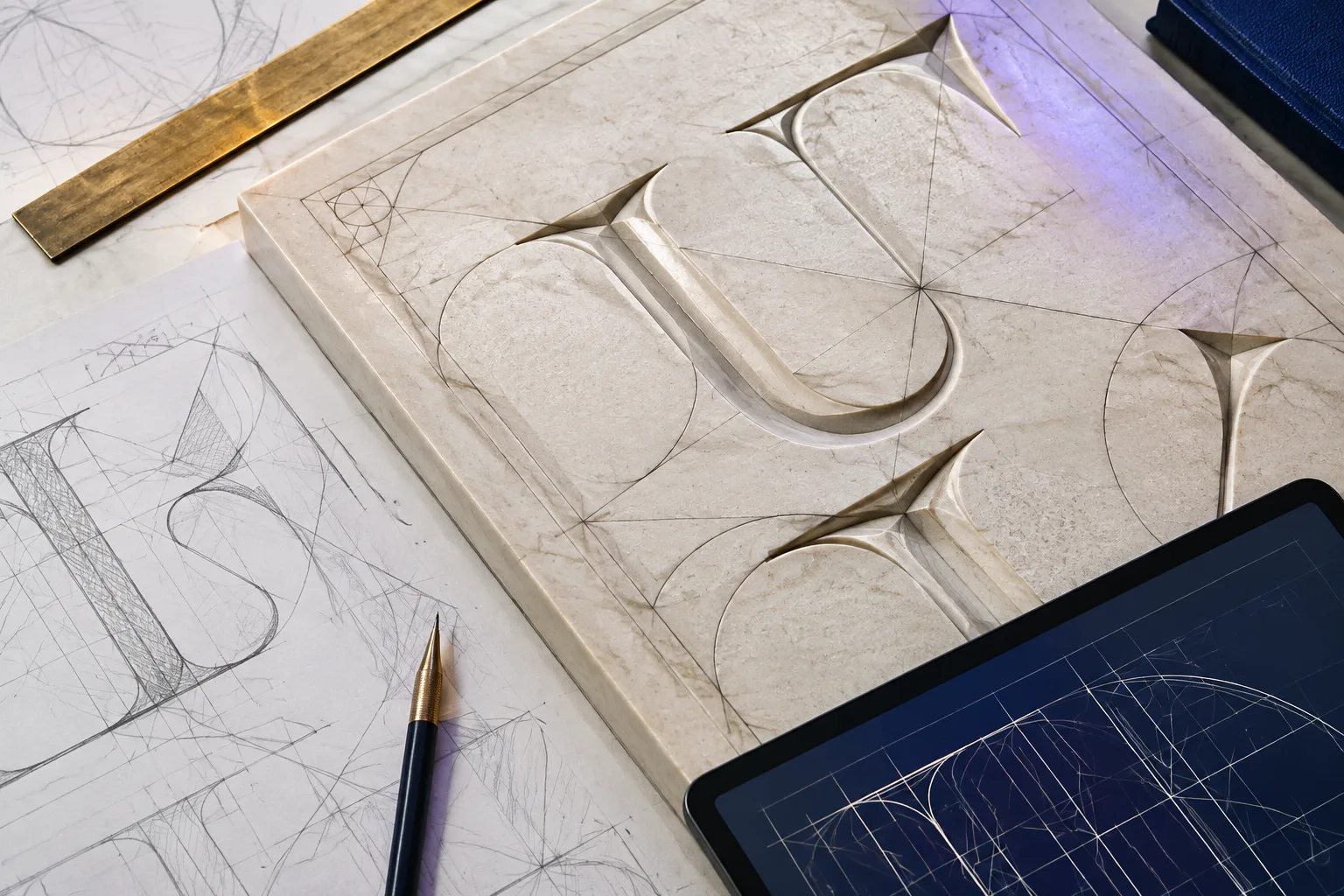
LetteringThe British Museum catalogues a marble Attic stele with Greek and Phoenician inscriptions and a documented date range.Carved-looking type may be designed from modern letterforms and texture tools; it is not an inscription record.British Museum Image credit register

Appearance alone cannot establish composition, price, fabrication method or provenance. Each physical example links to its source; digital studies are credited separately.

How we research

Read the source.
Keep the uncertainty.

01

Start with records

Dates, materials and identifications are checked against museum, archaeological and academic sources.

02

Describe before interpreting

Visible form is recorded before a stylistic label or cultural meaning is proposed.

03

Caption the image honestly

Photographs, reconstructions, measured drawings and contemporary illustrations are labelled as different kinds of evidence.

04

Make corrections visible

Source scope is recorded with each article, and substantive changes belong in the edition record.

Read the Editorial Policy

About & FAQ

Read the source.
Recognize the medium.

Olympus Journal is an independent educational draft for readers who want to distinguish a documented material or object from a reconstruction and a contemporary digital interpretation.

Scope, authorship and responsibility

What does Olympus Journal cover?

The journal explains classical architectural details, marble and other surfaces, decorative frames, lettering, and the way contemporary artists reinterpret historical visual language.

Are the featured objects real or digitally created?

The three prominent images in this edition are original AI-assisted editorial illustrations. Each is labelled as a contemporary concept. Articles link to documented museum objects and publications separately.

How are historical references verified?

Dates, materials, object identities and architectural terms are checked against museum records, archaeological publications or peer-reviewed educational sources. Visual resemblance alone is not treated as proof.

Where can I find an article’s sources?

Every article ends with an annotated source list explaining what each reference supports. Sources & Image Credits collects the complete register and the original-image record.

Can I reuse an image?

Visibility on this website does not grant a reuse licence. Review Sources & Image Credits and obtain permission from the verified publisher. External reference material remains subject to its own terms.

How can I contact the editor?

The Contact page will show a working email after the owner supplies and verifies it. Until then, [CONTACT_EMAIL] remains visible and no monitored inbox is claimed.