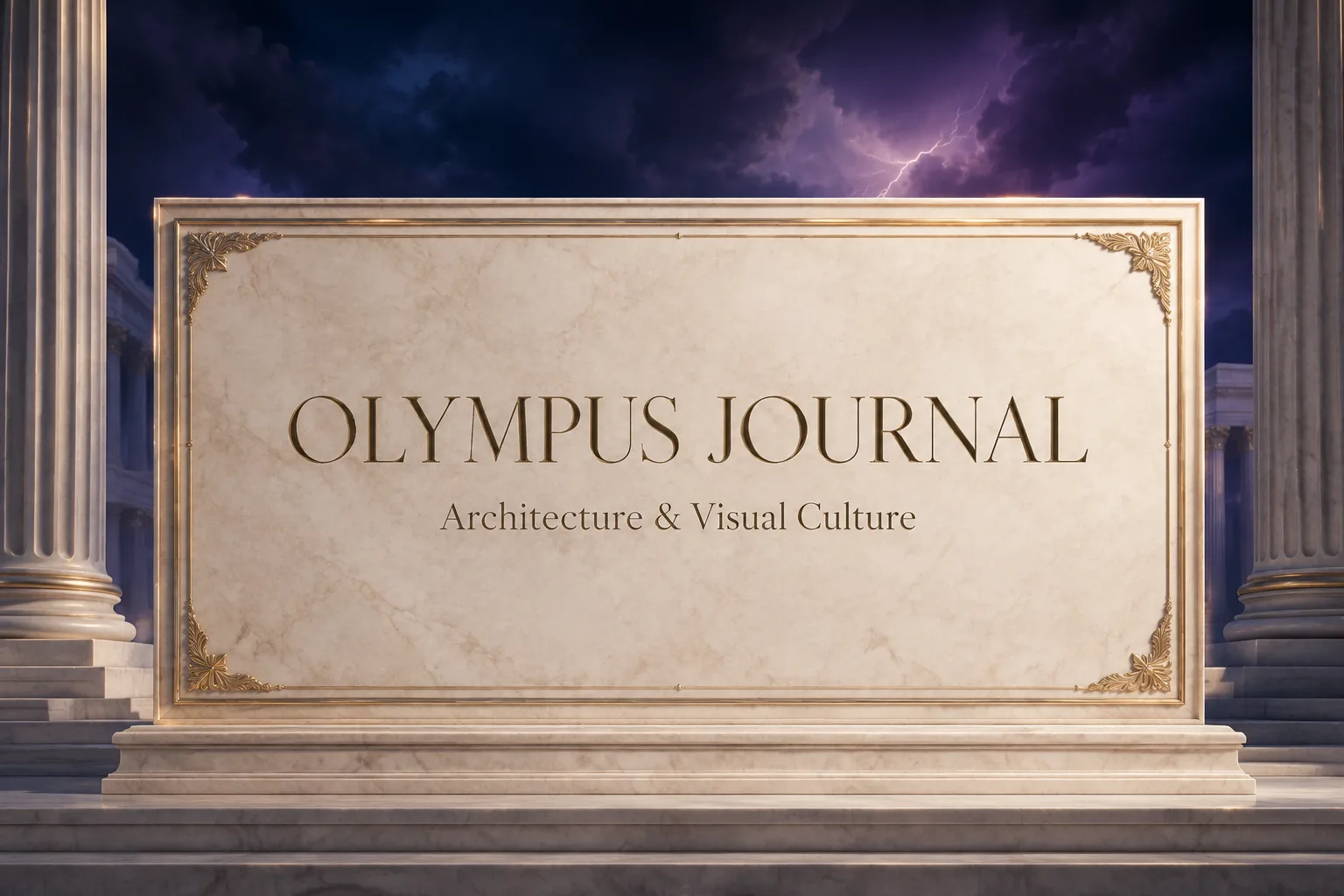
Architectural imagery can make stone look weightless, gold appear self-luminous and surfaces seem cleaner than any building. To read such an image responsibly, separate the physical material, any historically documented finish, and the artist’s presentational choices.
Material begins with a record
Ancient Greek architecture used limestone, marble, wood and terracotta in different roles. The Met’s overview describes these materials as part of systems of support, roofing and decoration. A generic pale render may communicate form but cannot identify stone type, block joins or surface condition.
A sound caption follows the object or site record. If analysis identifies marble, record that result and its source. If the image merely resembles marble, describe a marble-like digital texture instead of turning appearance into a material claim.
White is not a neutral historical default
Research on surviving pigment shows that ancient sculpture and architectural elements could carry colour. The Met’s study of a Greek sphinx demonstrates how imaging and analysis support specific reconstruction proposals while keeping interpretation visible.
That evidence does not license arbitrary colour on every classical object. A reconstruction should connect each proposed hue to traces, comparison or documented method. A fantasy image can use violet and gold freely, but it should call the palette an artistic choice.
Ornament occupies a place
A moulding, frieze, corner device or border gains meaning through its location and relationship to neighbouring parts. The Parthenon’s pedimental sculpture, metopes and frieze belong to different architectural zones. Moving them into a flat rectangular cover would change their function.
Our title panel borrows the broad idea of layered edges and corner emphasis without reproducing those zones. Its gold line is a graphic separator; the leaf-like corners are contemporary ornament. No specific ancient provenance is claimed.
Presentation changes perception
Directional light reveals fluting and carving through alternating highlight and shadow. Coloured reflections can connect separate surfaces or create atmosphere. The Met’s photographic essay Light on Stone demonstrates photography as an act of looking, while the object record remains distinct from the lighting used to present it.
The dark violet sky on the cover makes ivory and gold feel brighter. A neutral conservation photograph would make different choices. Both can be useful if the image type, purpose and manipulation are stated instead of hidden.
Reading takeaway
Keep material, documented historical finish and contemporary presentation as separate layers in every caption and analysis.
Sources and scope
These references support the factual frame of this article. They do not endorse its contemporary illustrations or editorial interpretation.
- The Metropolitan Museum of ArtArchitecture in Ancient Greece
Temple plans, stone and wood construction, painted decoration, and the relationships that define architectural orders.
- The Metropolitan Museum of ArtNew Research on the Color of Greek Sculpture
Scientific examination of pigment traces and the evidence-led reconstruction of ancient color.
- British MuseumAn introduction to the Parthenon and its sculptures
Documented example of pediments, metopes and a continuous frieze arranged in distinct architectural zones.
- The Metropolitan Museum of ArtLight on Stone: Greek and Roman Sculpture in The Metropolitan Museum of Art
Museum photographic essay used to discuss how controlled lighting reveals carved volume without changing the object’s material record.